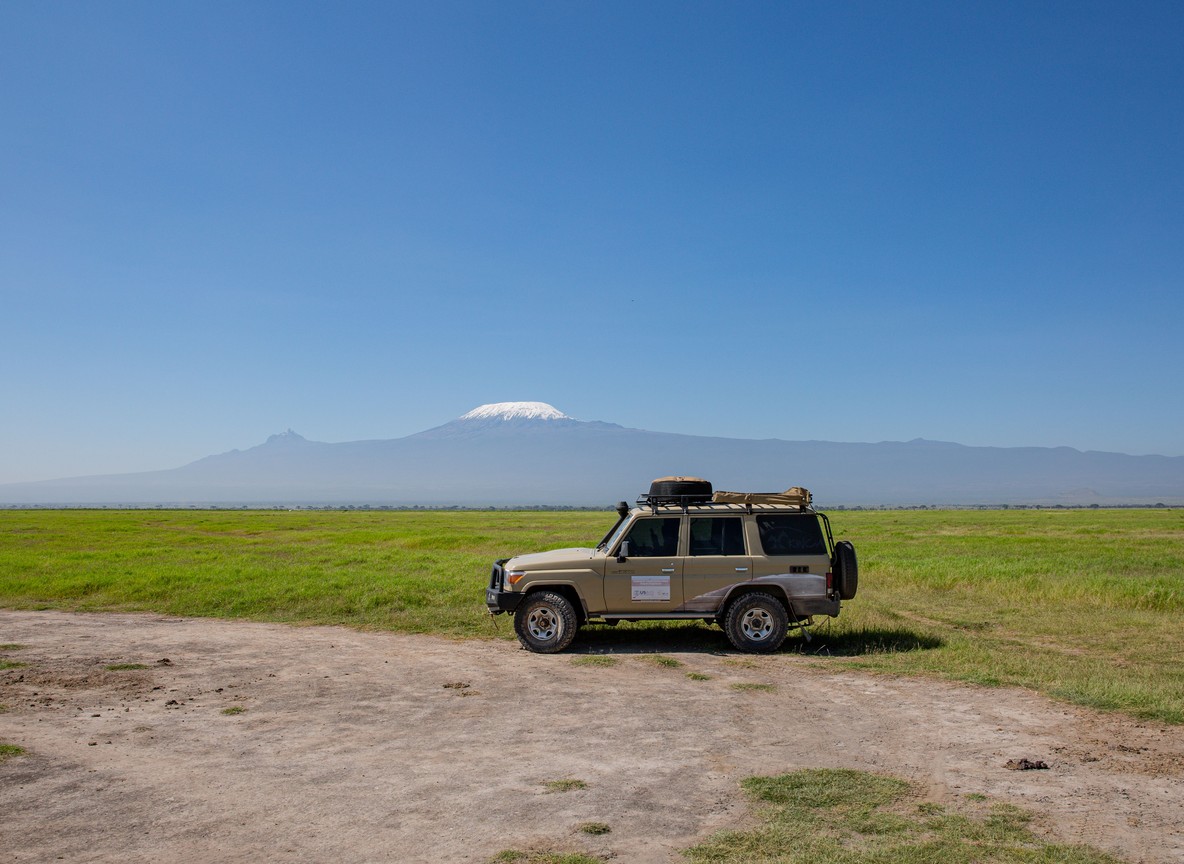
Figuring out how many nights in Amboseli to budget is one of the more consequential decisions in a Kenya itinerary. Get it right and the park has space to show you what it does best: elephant herds moving across open plains, Kilimanjaro clearing at first light, and the quiet rhythms of a swamp ecosystem unlike anywhere else in East Africa. Get it wrong and the visit feels rushed, the mountain stays hidden behind clouds, and you leave wondering what the fuss was about.
Amboseli is not a massive park. You are not covering hundreds of kilometres of wilderness. But the quality of the experience scales noticeably with how long you stay. Here is a breakdown of what each stay length actually delivers.
The Quick Answer: 1, 2, or 3 Nights
Most travellers will find the decision comes down to three options:
- 1 night: possible but tight, suited to visitors with strict time limits
- 2 nights: the practical sweet spot for most itineraries
- 3 nights: the better choice for photographers, families, and anyone who cares seriously about Kilimanjaro visibility
The right answer depends on your priorities, your budget, and how central Amboseli is to the wider trip.
What One Night in Amboseli Gives You
A single overnight is the minimum workable stay. It gives you one afternoon or early-evening game drive on arrival and one early-morning drive before departure. That is often enough to see elephants, which are reliably present across the park’s plains and around the Enkiama and Longinye swamps throughout the year.
What one night does not give you is flexibility. If the sky is overcast on your only dawn, Kilimanjaro stays invisible. If the first game drive is quiet, there is no second attempt to compensate. Departure usually follows shortly after breakfast, which means any late-morning wildlife activity goes unseen.
One-night visits work well when:
- Amboseli is a short detour within a longer Kenya circuit
- your goal is a single morning with the elephants rather than a deep park experience
- time is the binding constraint, not preference
Go in with clear expectations and it can still be a strong trip. Go in hoping for the full Amboseli experience and you will likely feel the limits.
Why Two Nights Works for Most Travellers
Two nights is the stay length that allows Amboseli to breathe. You gain a second dawn, a second full afternoon, and a pace that does not require rushing every meal toward the next transfer.
The practical gains are significant:
- two separate dawn windows for Kilimanjaro, which roughly doubles your odds of a clear view
- more than one meaningful elephant encounter, across different light conditions and terrain
- time to sit near the swamp margins and observe behaviors that do not show up in a single drive
- the lodge or camp itself becomes part of the experience rather than just a place to sleep
For first-time safari visitors, 2 nights is usually where Amboseli starts to feel like a real destination rather than a box checked on the itinerary. The park rewards patience. With a second day, you can afford some of it.
When Three Nights Makes the Difference
Three nights is not essential for a satisfying visit, but certain travellers will find the extra day genuinely changes what they come away with.
Photographers benefit most. Amboseli’s combination of open plains, swamp edges, and mountain backdrop requires good light and luck to work together. Three nights means more sunrise and sunset options, more chances to react when conditions align, and more time to stay with a scene rather than moving on.
Families with children often need a steadier rhythm. Arrival is less pressured, rest time is easier to protect, and no single game drive carries the weight of the entire trip.
Honeymooners and repeat visitors tend to come for atmosphere as much as wildlife counts. Three nights allows that atmosphere to settle. The difference between feeling like a visitor passing through and feeling like someone who actually spent time in the park often comes down to this extra day.
Travellers focused on Kilimanjaro visibility should note that mountain clarity is most reliable at dawn but is never guaranteed. Cloud cover can persist across two consecutive mornings. Three nights provides three separate attempts and meaningfully better odds of at least one unobstructed view.
How Stay Length Affects Elephant Viewing
Amboseli has one of the most closely observed elephant populations on earth, and the herds are present throughout the year. Even a one-night visitor will almost certainly see elephants. What changes with more nights is the quality and variety of those encounters.
On a single day, you might see one herd moving across the plains at midday. Over two or three days, you begin to notice different family groups, different behavioral patterns, and the way the elephants shift between the swamps and open grassland at different times of day. The fuller understanding of the ecosystem that repeat visitors describe almost always comes from multiple drives over several days, not from a single extended session.
How Many Nights in Amboseli When Combining Parks?
The role Amboseli plays in your wider Kenya itinerary should shape the decision.
If Amboseli sits alongside Masai Mara, Tsavo, or Samburu in a multi-park route, two nights is usually the right allocation. It keeps the trip balanced without compressing the Amboseli experience into something too thin.
If Amboseli is the primary or only destination on the trip, three nights is worth planning for. The park carries the full weight of the journey in that case, and a relaxed pace pays off.
If Amboseli is a short add-on at the end of a longer safari, one night can serve as a proper farewell to Kenya’s iconic southern landscape without adding days you do not have.
Stay Length at a Glance
| Stay | Best For | Main Trade-off |
|---|---|---|
| 1 night | Tight schedules, brief detours | Little room to recover if conditions are poor |
| 2 nights | Most travellers, first-timers, multi-park routes | Not ideal for dedicated wildlife photography |
| 3 nights | Photographers, families, Kilimanjaro focus | Higher cost, more itinerary space required |
Explorer Notes
A few practical details that regularly catch visitors off guard.
Confirm your first afternoon schedule before arrival. Some camps position check-in for late afternoon, which cuts your first wildlife window to a short game drive at dusk. Ask the property in advance whether an earlier start is possible.
Season affects mountain chances. The long rains, which run roughly from April into May, reduce Kilimanjaro clarity. The clearest mountain windows tend to fall in the dry months of January to March and July to October. If a summit view matters to you, match your visit to a drier period.
Camp position affects usable game drive time. Camps closer to the central swamp and Observation Hill allow quicker access to the best wildlife areas. Properties positioned at the park edges may involve longer internal transfers, which noticeably reduces usable drive time on a short stay.
Children and game drive pace. Two full drives per day can tire younger children quickly. Three nights allows you to build in a midday rest without sacrificing total wildlife time, which keeps morale intact across the trip.
Conclusion
The answer to how many nights in Amboseli to plan for comes down to what kind of trip you are building. One night is the minimum that gives the park any real chance to show itself. Two nights is the point where most travellers feel they actually experienced Amboseli rather than passed through it. Three nights is the version that leaves room for everything the park can offer, particularly when the mountain or serious photography is part of the picture.
For the majority of visitors planning a first or standalone Amboseli trip, two nights is the practical starting point. If your priorities include dedicated photography, a clear Kilimanjaro morning, or a genuinely unhurried pace, building in a third night is the most reliable way to protect those possibilities.
Turn this reading into a real itinerary with help from a Kenya-based safari team.
Start Planning Your Safari